





[Caterpillar] Scaling UX for a Global B2B Platform
Client:
CAT
Role:
Lead UX/UI Designer
Year:
2022
Project Overview
Scaling usability across a global B2B commerce ecosystem
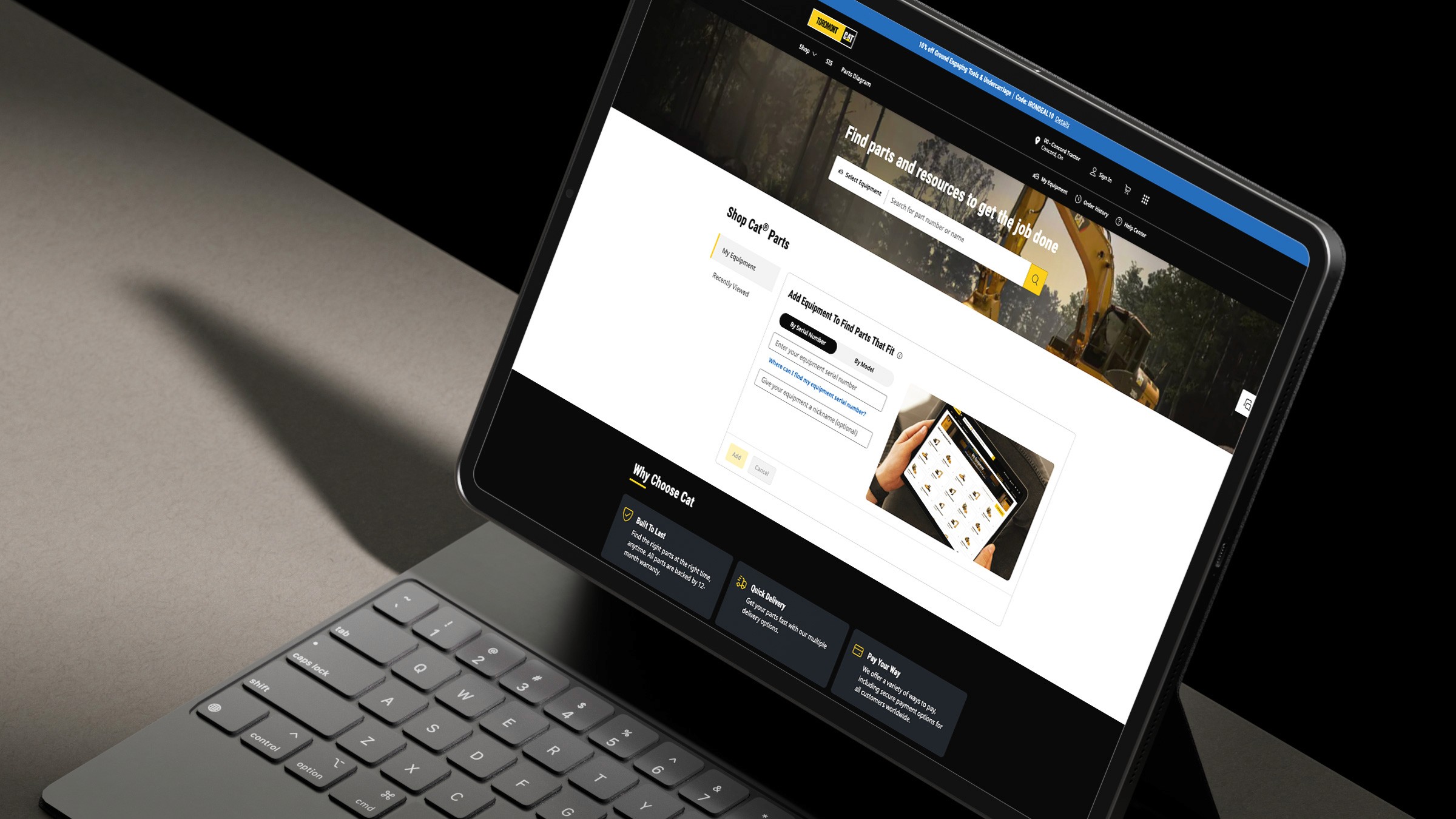
As Lead UX/UI Designer at Accenture, I contributed to parts.cat.com, Caterpillar’s global B2B e-commerce platform used by dealers and enterprise clients worldwide.
The project was part of Caterpillar’s Unified Digital Experience (UDX) initiative, focused on improving usability, consistency, and scalability across one of its most critical digital sales channels.
Operating across 10+ languages and regions, the platform supports highly technical products, complex search behaviors, and bulk ordering at scale. My work focused on optimizing key purchase flows while aligning improvements with Caterpillar’s global Alloy Design System.
My Approach
Designing for scale, consistency, and operational clarity
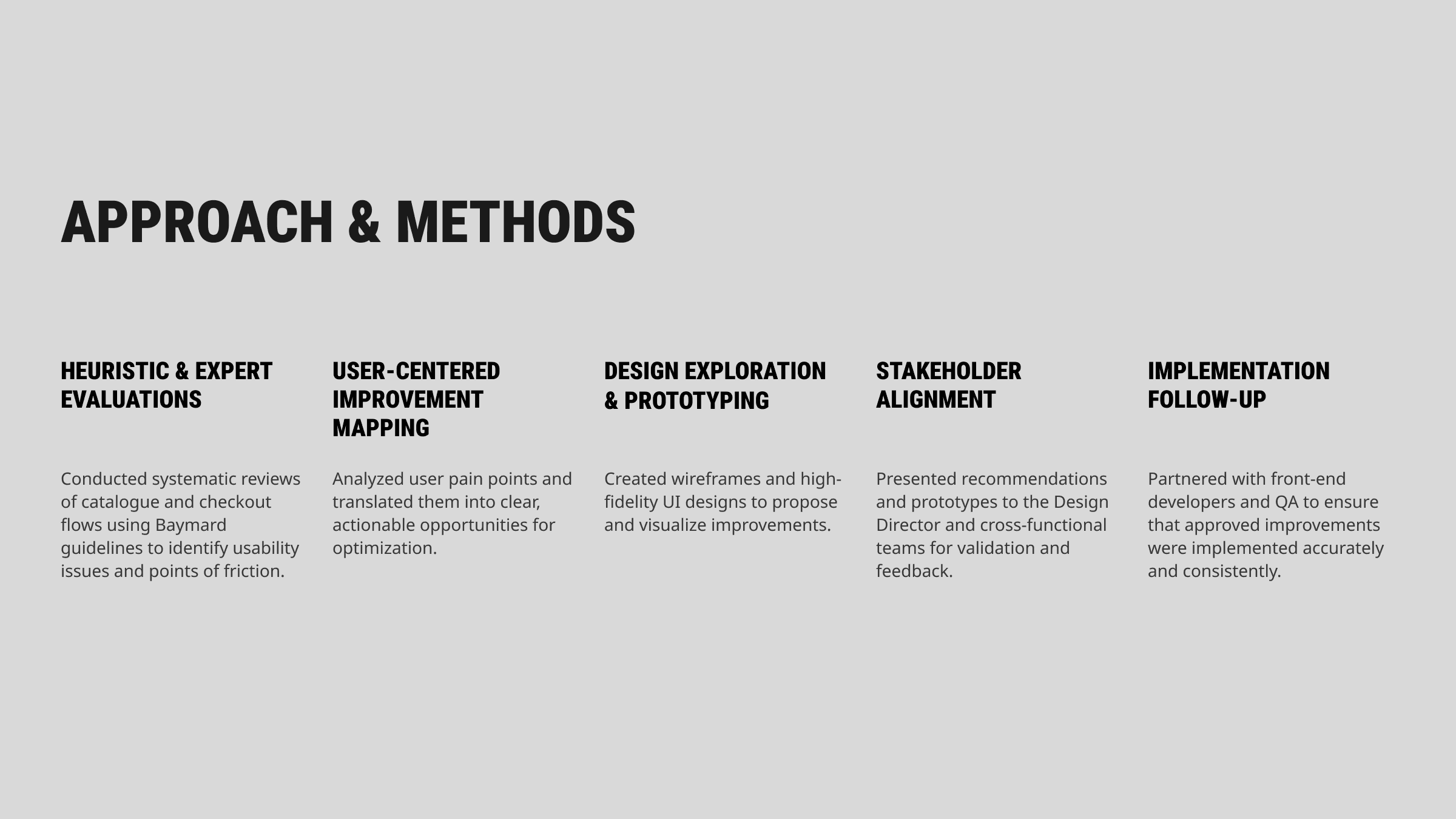
Heuristic & expert evaluations
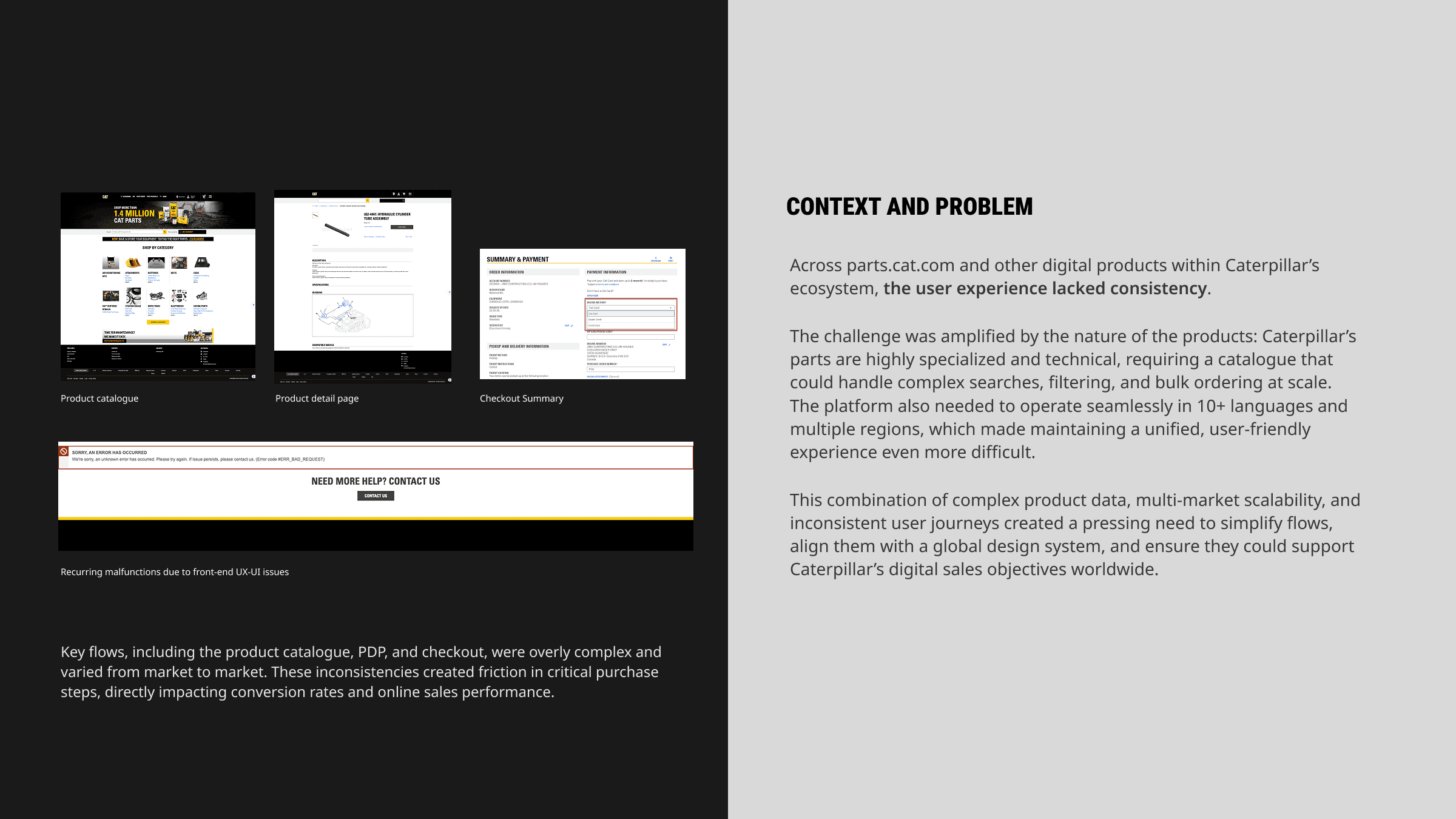
Reviewed catalogue, PDP, cart, and checkout flows using Baymard guidelines to identify friction and usability gaps in business-critical journeys.
User-centered opportunity mapping
Translated complex user and business needs into clear design opportunities, prioritizing impact on task success and flow efficiency.
Design exploration & system-aligned solutions
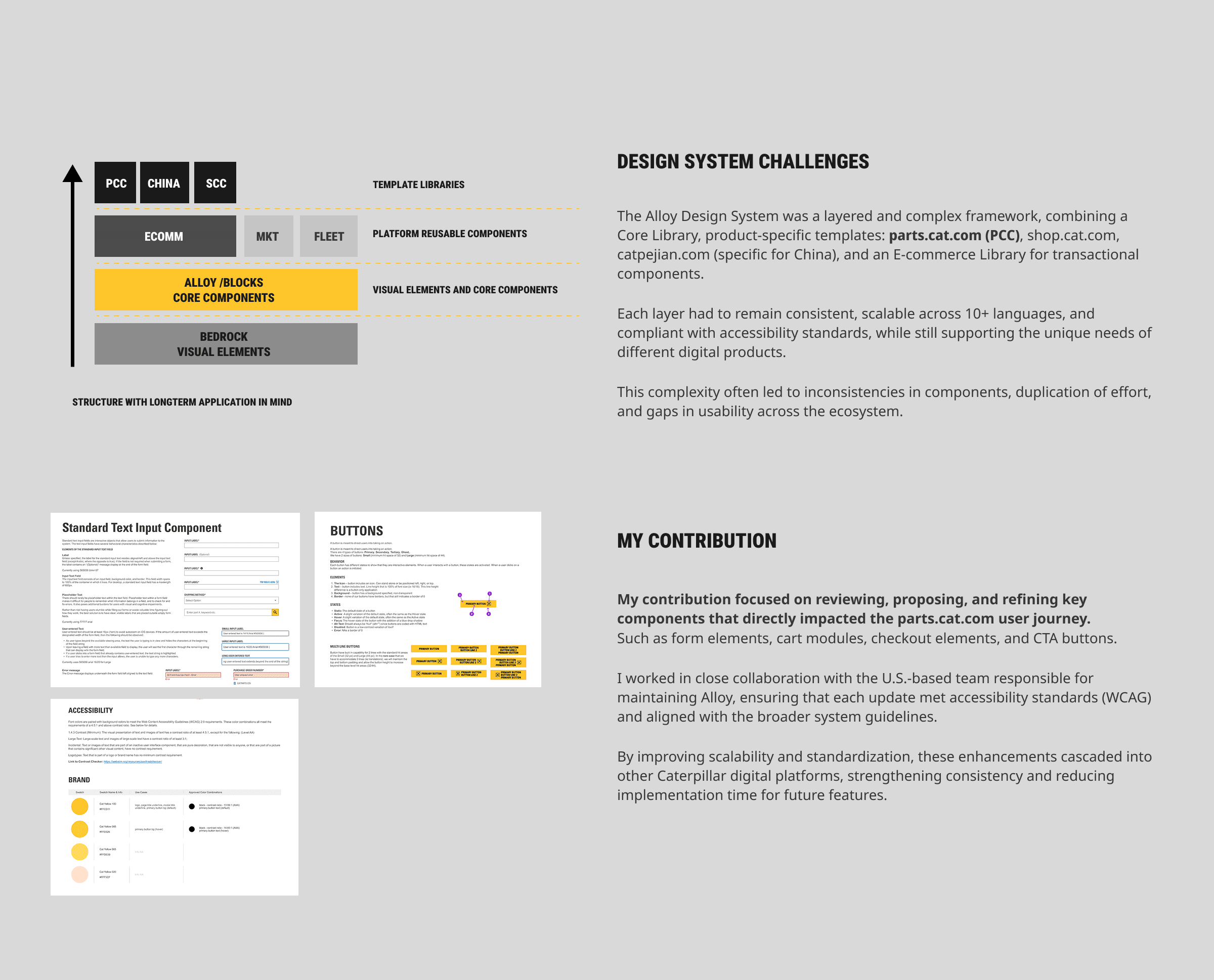
Designed wireframes and hi-fi UI proposals that respected the layered Alloy Design System while improving clarity, hierarchy, and scalability.
Cross-team alignment & delivery
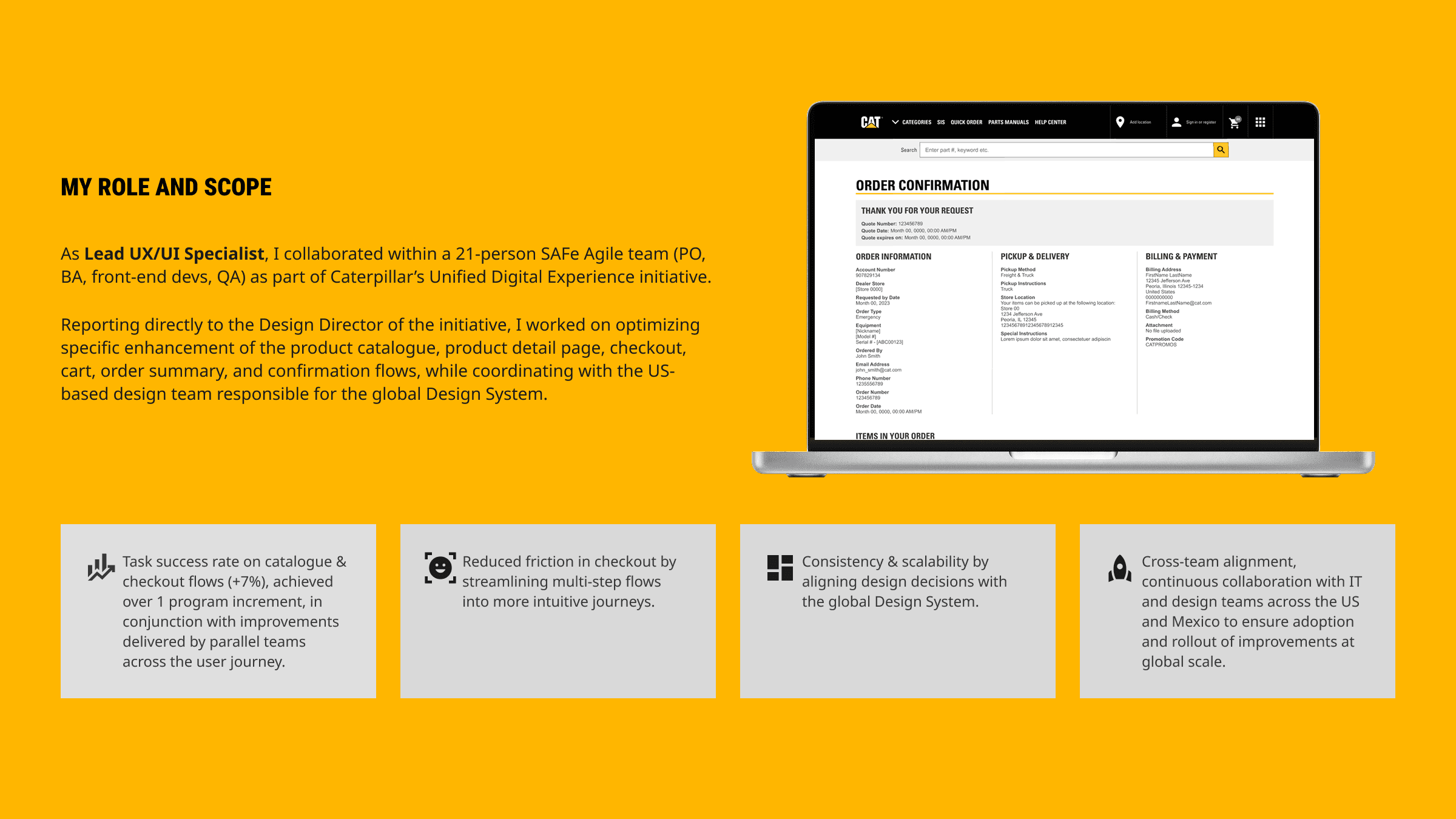
Collaborated with US-based design leadership, front-end teams, and QA within a SAFe Agile environment to ensure adoption and consistent implementation across markets.
Key Outcomes
Measured improvements across critical B2B purchase flows
+7% increase in task success rate
Across catalogue navigation and checkout flows within one program increment.
–11% reduction in checkout friction
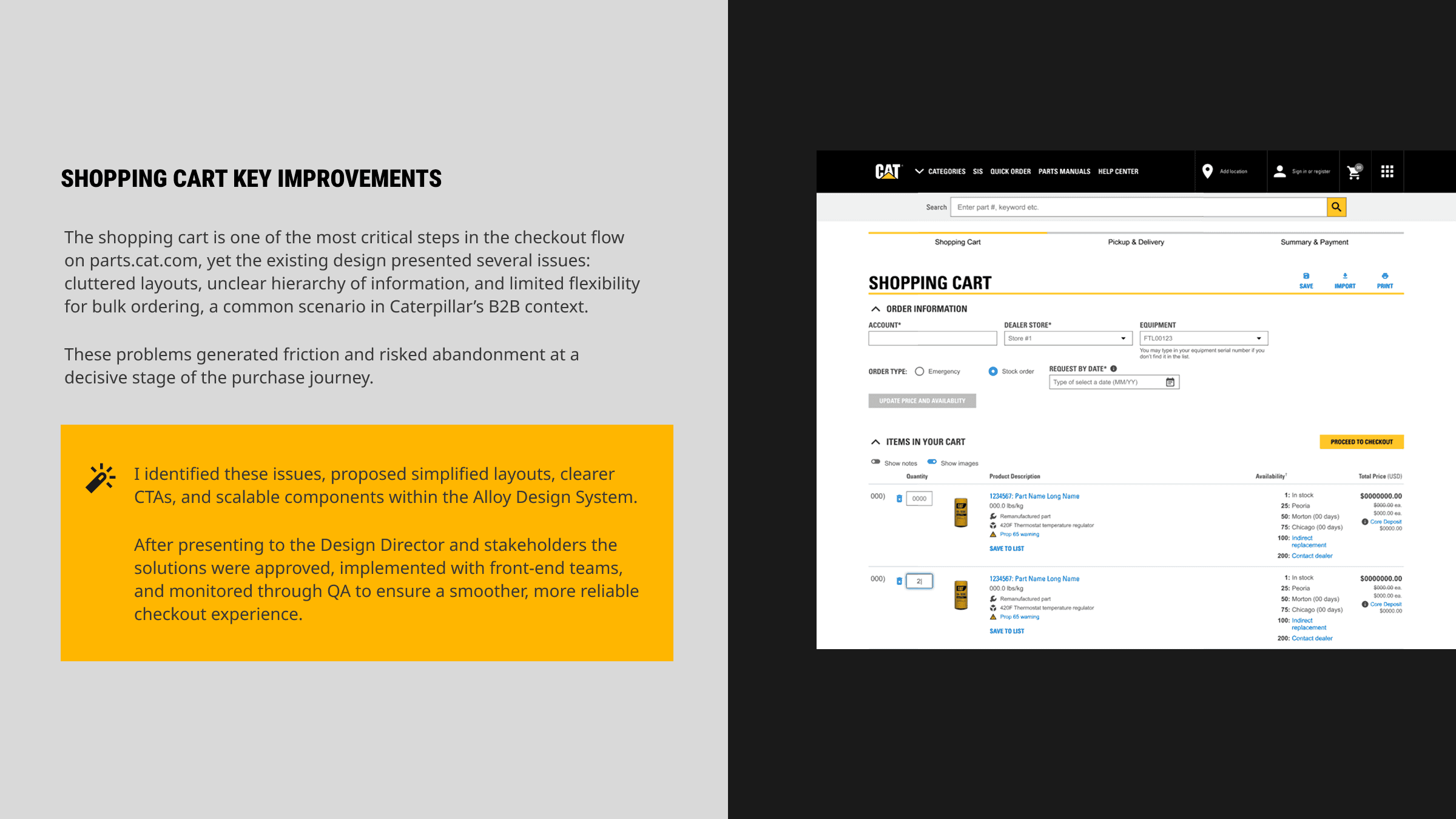
By simplifying multi-step interactions and clarifying information hierarchy in cart and order summary.
–18% faster completion time
For bulk-order checkout scenarios, improving operational efficiency for enterprise users.
+14% improvement in design consistency scores
Through alignment with the Alloy Design System across PCC and related platforms.
Improved scalability across 10+ languages
By standardizing components and reducing design inconsistencies between regions.
Reduced design-to-development handoff time
Thanks to clearer system-aligned specifications and reusable components.